
As a genre, memoirs are a by-product of the time you live in and the experiences you encounter in the journey called life. Arundhati Roy’s “Mother Mary Comes to Me” is not only the personal account of one of the most celebrated authors of the country, but also a narration of India’s political evolution from a fledgling secular republic to a state, which is flirting with religious fascism.
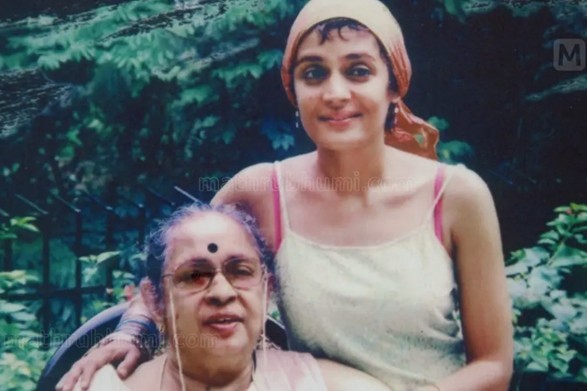
In Roy’s book, personal and political both combined together to create a gripping account of the lives of two women- a mother and a daughter- coming to terms with their turbulent lives. “Mother Mary Comes to Me” is a story of Roy’s mother Mary Roy, it is also a tale of the author’s evolution from being woman in search for meaning to emerge as the stormy petrel that gave voice to the marginalised and the oppressed unmindful of what the mainstream media and ruling class thought of her.
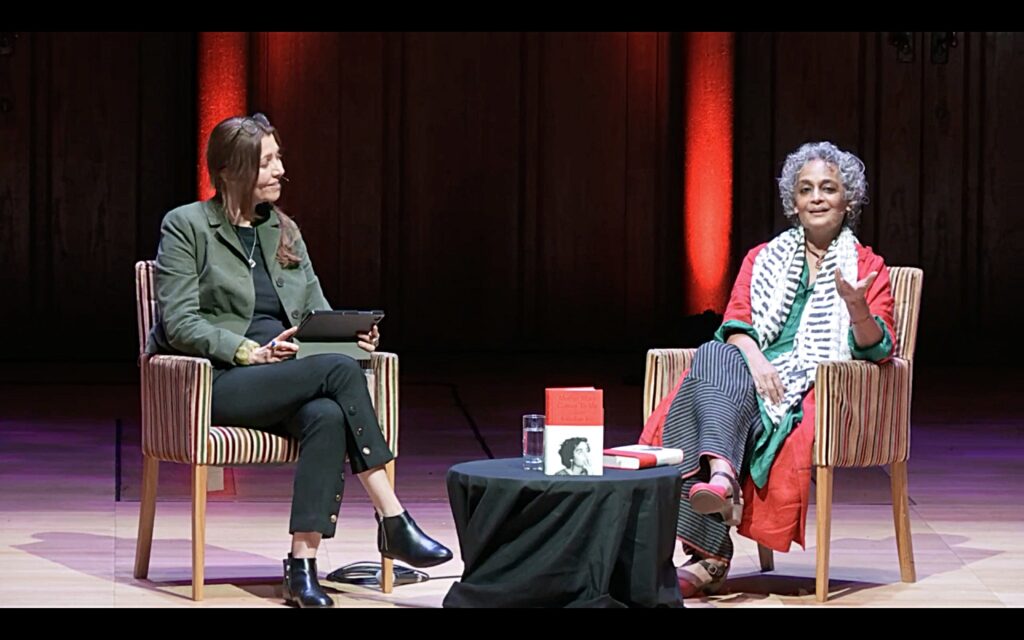
Roy weaves two parallel stories: one of a woman who became a single mother early in her life and the other of a young girl who left home at the age of 16 to escape her mercurial mother.
Mary Roy was a woman far ahead of her times and her conduct at times used to drive people around her crazy. Her early motherhood and the difficult circumstances she was compelled to bring up her child shaped her tumultuous personality.
Belonging to a Syrian Christian community from Kerala, she defied her community and her parents by marrying a member of the Bengali bourgeoisie, known to his friends as Micky Roy. He was a manager in one of the tea estates in Assam.
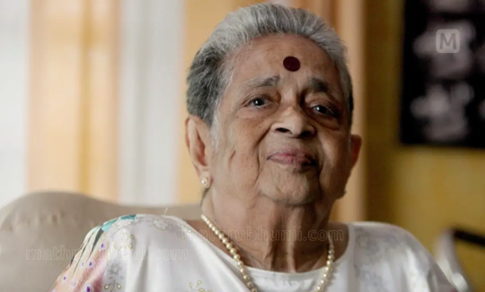
His alcoholism pushed Mrs Roy- the author addresses her mother with that name- to the brink and she walks out of the marriage with her two kids -Lalith and Arundhati.
She landed in Ooty in Tamil Nadu in a “cottage that belonged to our maternal grandfather”, but the Syrian Christian family’s inheritance law claimed that “daughters had no right to their father’s property” and hence, they were to leave the house immediately.
Mrs Roy worked as a school teacher in Ooty before moving to her ancestral village Ayemenem in Kerala. In the village. she first stayed with her family who Arundhati describes as “extraordinary, eccentric, cosmopolitan people, defeated by life”. However, Mary could not stay there for long and decided to set up her own house and then school. Both, shaped by her own rebellious personality and her unique way of teaching.
Her school first began from a small rented accommodation, which after meeting success moved to a bigger space at the outskirts of the city.
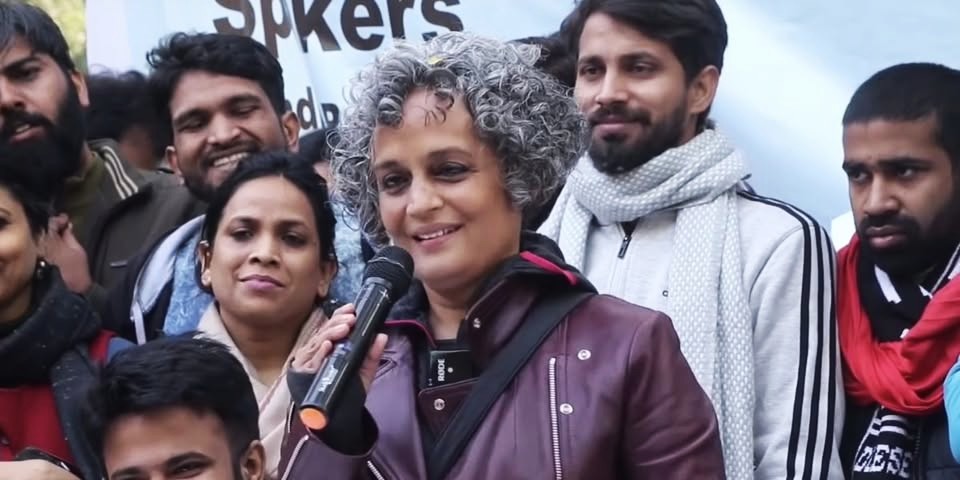
Meanwhile, Arundhati was sent to Ooty to study in a boarding school to allow her mother to continue her defiance of the conservative Syrian Christian community.
Quite often her children, particularly her daughter was the victim of her wrath. Without realizing Arundhati became an alter ego of Mrs. Roy’s. Defiance came easy to the author. From an early life she refused to beg for support from her mother despite facing grave financial and existential challenges.
In Kerala, if Mrs Roy was building her world in her own persona,in Delhi, a 16 year old Arundhati was experimenting with her own life here. She joined as the student of the School of Planning and Architecture in early 1970’s, she remained out of touch with her mother. Her mother never bothered to enquire about her daughter in those years.
Mrs Roy’s emotional canvas was not confined to her daughter; she was busy transforming many lives through her school and at the same time she kept on challenging her community’s inheritance law.
Her personal fight against the family finally went to the Supreme court and led to her victory – the apex court annulling the discriminatory inheritance law.
At the same time, daughter in Delhi was wrapped in her own internal, emotional and existential battle. Her struggle for survival after finishing the architecture school, her emotional adventure with a senior in the architecture school and how that entanglement took her to Goa, the boy’s home state is a story that is told with great sensitivity.
Expectedly, the rebellious daughter of a fiery mother could not accept a regular married life in Goa, and she came back to Delhi. Her dalliance with the film industry started during this phase in life and that also meant bringing in one more man in her life a married man with lots of artistic talent with whom Arundhati was in deep awe.
In Delhi, for the first time when she was 23 years of age, she meets her father, Mickey Roy. Her alcoholic father had lost his job in the tea estate and was looking for a new career in Delhi, but his addictions were crushing him.
When Arundhati broke the news about her father’s death Mrs Roy called him “A Nothing Man” without betraying any emotion.
In the book two biographies run parallel to each other. The relationship between the two unconventional protagonists remains mercurial with the mother proud of her daughter’s achievement as a writer. She hosts the book launch of “God of Small Things” in her school in Kotayam to celebrate her daughter’s debut novel. She would read all her daughter’s writings.
Talking about her mother, Arundhati writes at one place –
“[She] taught me how to think, then raged against my thoughts. She taught me how to be free and raged against my freedom. She taught me to write and resented the author I became.”
The change in political landscape starts impacting her as a person and as a writer. With the new majoritarian regime tightening the noose around progressive writers and thinkers Arundhati felt the march of fascism might catch her, she quietly dissociates herself from conjugal relationship with her partner so that her husband’s family is not disturbed by the regime.
Though Arundhati wants us to read “Mother Mary Comes to Me” as a book of fiction, it is more than that: it is a portrait of two powerful women, both self-made and always in conflict with the time they live in.
(Cover Photos Courtesy: Arundhati Roy/Facebook.com)
Arundhati RoyAuthorbook reviewBooker PrizeBooksIndiaMary RoyMother Mary Comes to MeSocial ActivistThe God of Small ThingsWriter