
Leila Khaled, by today’s definition, would be called a terrorist. Yet, in 1969 and 1970, when she hijacked an aircraft and later participated in the hijacking and destruction of four aircraft at Dawson’s Field in Jordan, she was viewed very differently. These were audacious acts that brought the world’s major powers to the brink of confrontation and intensified the repression of Palestinians living in Jordan, forcing many to seek refuge in neighbouring Lebanon.
Her daring actions compelled the international community, particularly the United States, to pay greater attention to the Palestinian cause. In distant towns and cities across the world, the reverberations of Leila Khaled’s actions were widely felt. She was compared to the Cuban revolutionary Che Guevara, and countless newborn girls were named after her. At the time, she was regarded as an icon rather than a terrorist.
Imagine if Leila Khaled had carried out similar attacks in 2025 or 2026. The reaction would have been entirely different. The media might either have ignored the incident or, if it had reported it, unequivocally condemned it as an act of terrorism.
Despite the legitimacy of their demands, the Palestinian cause received only a lukewarm response from the United States. Even Arab countries were relatively restrained when it came to supporting the demand for a separate Palestinian homeland.
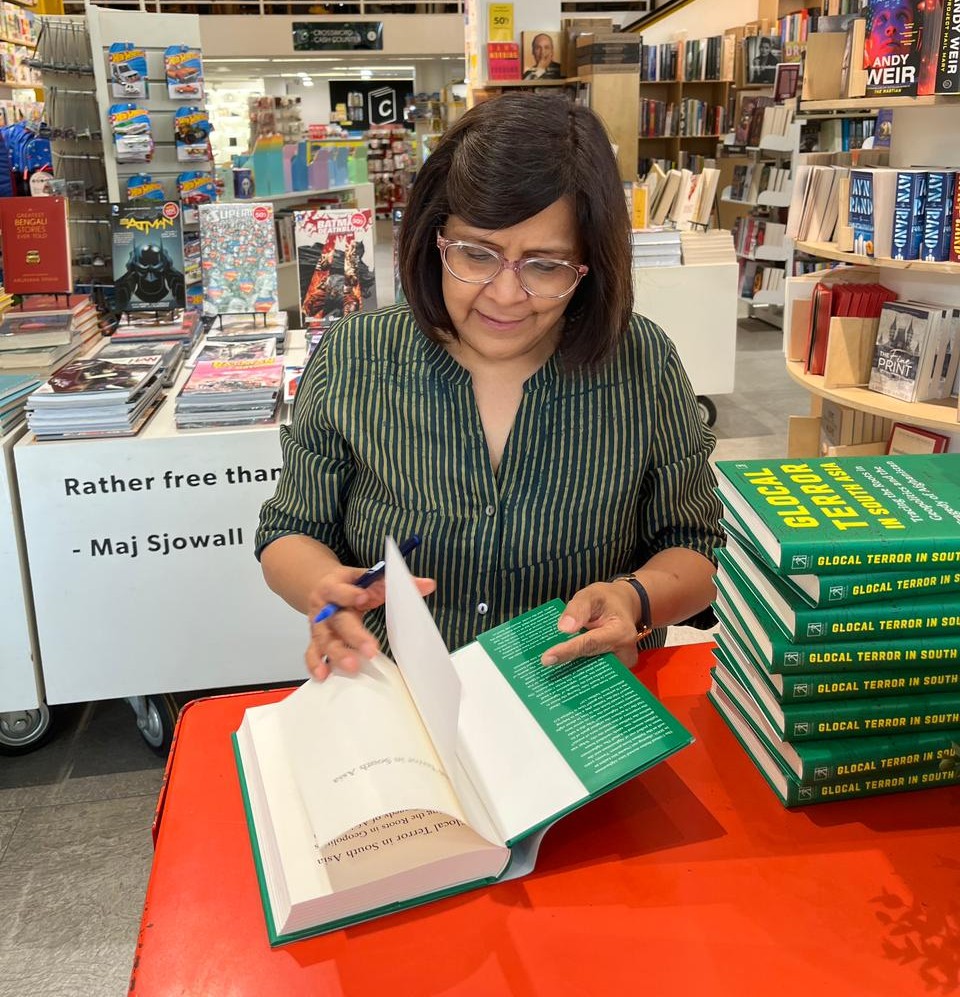
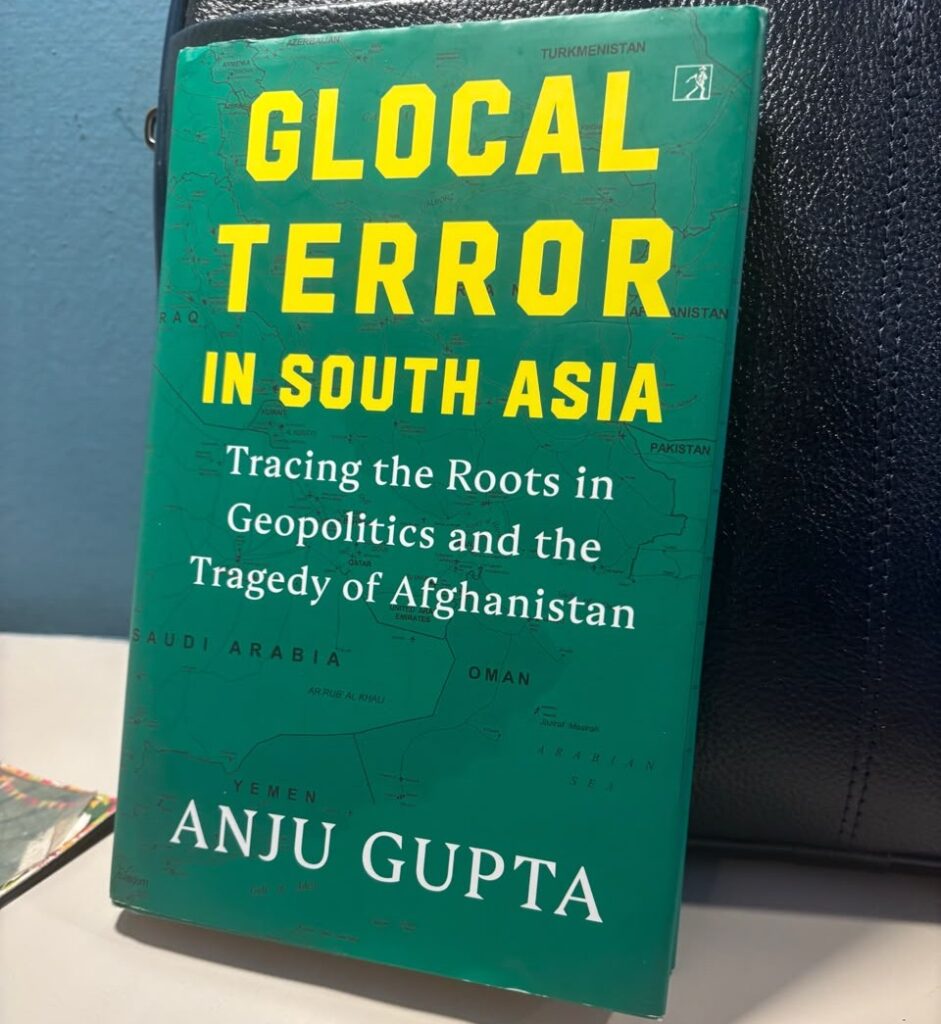
Anju Gupta’s excellent book, Glocal Terror in South Asia, traces the evolution of Islamic terrorism from the Arab world to South Asia. A retired senior police officer who also served with the Research and Analysis Wing (R&AW), Gupta provides a much-needed South Asian perspective on terrorism. She explains how the Soviet Union’s entry into Afghanistan contributed significantly to the growth of radical Islam.
This reviewer, however, would have appreciated it had the author stated more explicitly that the United States also played a key role in the rise of Islamic militancy. Former U.S. Secretary of State Hillary Clinton herself has acknowledged that American support for the Mujahideen during the Soviet occupation of Afghanistan contributed to the emergence of militant jihadist movements. At the time, both the Palestinian struggle and the Afghan resistance were often described as local jihads—two conflicts of immense historical and strategic significance.
What was overlooked, however, was that the Palestinian struggle was not fundamentally a jihad, as it was often portrayed, but rather a national liberation movement by people who claimed to be citizens of a country whose land was taken away on May 15, 1948—a day Palestinians remember as the Nakba, or catastrophe. Approximately 750,000 Palestinians lost their homes during this period, of whom an estimated 10 to 12 per cent were Christians.
Since then, the Palestinian struggle has remained relentless, even as the rise of Israel and the support it received from the United States and European powers increasingly recast the Palestinian quest for independence as an act of terrorism.
Gupta’s meticulously researched book highlights the dominant Western narrative that equated the Palestinian struggle for independence with the Afghan campaign against the Soviet Union. As she points out, the funds raised by Saudi Arabia for the Palestinian cause through the Palestine Liberation Organization (PLO) were not only considerably smaller but were also distributed over a much longer period than those provided to the Afghan Mujahideen.
As Gupta notes, “The PLO received a total of $992 million from Saudi Arabia between 1978 and 1991, while the Afghan Mujahideen received $1.8 billion between 1987 and 1989.” This was also the period during which Arab fighters began arriving in Pakistan in large numbers.
Gupta argues that the rise of terrorism in the Indian subcontinent was closely linked to the influx of Arabs such as Osama bin Laden and Ayman al-Zawahiri, the Egyptian doctor who became al-Qaeda’s chief strategist. Although their principal strategic interests lay in Iraq, Syria, and elsewhere in the Middle East, they honed their capabilities in Afghanistan and used Pakistan as a sanctuary to strengthen their networks with the support of the Inter-Services Intelligence (ISI).
The dispute between India and Pakistan over the Kashmir Valley provided legitimacy to al-Qaeda and its Pakistan-based affiliates, including Lashkar-e-Taiba (LeT) and Hizbul Mujahideen.
The author, Anju Gupta, discusses how India was drawn into the Afghan imbroglio following the hijacking of Indian Airlines Flight IC-814 from Kathmandu to Delhi. For a journalist who has closely followed the trajectory of attacks on India’s security environment, the episode has left many unanswered questions about the motives and identities of those who perpetrated a criminal act that had the potential to trigger a war between the two neighbours.
The book does not depart from the prevailing narrative that attributes the hijacking to Pakistan-based terrorist groups. IC-814 also brought the Taliban’s growing role in terrorist operations into sharp focus. Subsequently, the Russians began to view the Taliban as an indigenous force that also challenged the Islamic State. This perception was gradually accepted by India and even by the Islamic Republic of Iran. However, the Taliban’s emergence as a nationalist force also gave rise to a new Afghanistan that openly asserted territorial ambitions long constrained by the British Raj’s creation of the Durand Line.
These differences have endured and continue to fuel armed standoffs between the two neighbours. Although Anju Gupta’s book concludes with developments up to 2025, there are several reasons to believe that the geostrategic landscape of South Asia has changed significantly since then, particularly following the confrontation between the United States and Iran.
Pakistan’s emergence as a mediator and its growing ability to stand up to India have enhanced Islamabad’s strategic importance. Experts in strategic affairs argue that Pakistan has evolved into a significant defence power, aided by its close ties with Saudi Arabia. It is also a military ally of China and has actively marketed its defence capabilities and weapon systems to several middle powers.
In other words, the geopolitical landscape has changed considerably since Operation Sindoor and since Anju Gupta completed her book. That said, Gupta’s scholarship is evident throughout as she deftly marshals forgotten facts about various terrorist organisations and their leaders. Glocal Terror in South Asia is an engaging, well-researched, and important contribution for readers seeking to understand the evolution of terrorism and the complex geopolitics of South Asia—a region inhabited by what Salman Rushdie famously called the “midnight’s children.”
Act of TerrorAnju GuptaChinaIndiaIPSIslamic StateOperation SindoorPakistanPalestinePoliticsR&AWSouth AsiaterrorTerrorism