
Nigerian novelist Chimamanda Ngozi Adichie, in her brilliant TED Talk, put it succinctly: “Show people as one thing, over and over again, and that is what they become.” She was pointing to the risks and dangers of a single story. People have many layers of existence, and the mind creates meaning for survival – in other words, a unique, multilayered story for each individual. In fact, the brain seems to be doing exactly this: creating stories in our minds based on a person’s context and circumstances.
However, as society scales up from the individual to nations and religions, the validity of multiple stories tends to be ignored, while a single story is perpetuated. Even this is not truly a single story; power groups at every level promote their own narratives, and the resulting struggle for dominance has shaped much of human history. The single story of an educated and cultured white civilization was effectively used to rule “uncultured” Africa, India, and many other societies. Their native wisdom and inherent strengths were placed on an inferior pedestal, while the white man reigned supreme by appropriating and reintegrating elements that originally belonged to these native cultures into his own narrative. As a result, the myths and knowledge of a culture are returned to its people only after being recycled, and eventually they begin to forget their own story. Even today, Africa is often imagined as perpetually underdeveloped, and India is still perceived by some as a land that moves on bullock carts.
The greatest risk of a single story is the sense of inferiority it creates. People begin to doubt their own cognitive strength—a strength that every human mind possesses. This inner resource comes from one’s culture, roots, and later exchanges with others. However, once a culture loses the ability to accept and express its own diverse stories, it gradually adopts the single narrative imposed upon it and, in the process, loses its identity. The British ruled much of the world through this single story, and today America projects its own dominant narrative. Nations, too, are increasingly embracing the American “model of happiness” as the prevailing contemporary story. The roots of many religious conflicts also lie in this insistence on a single truth while rejecting the possibility of multiple valid stories.
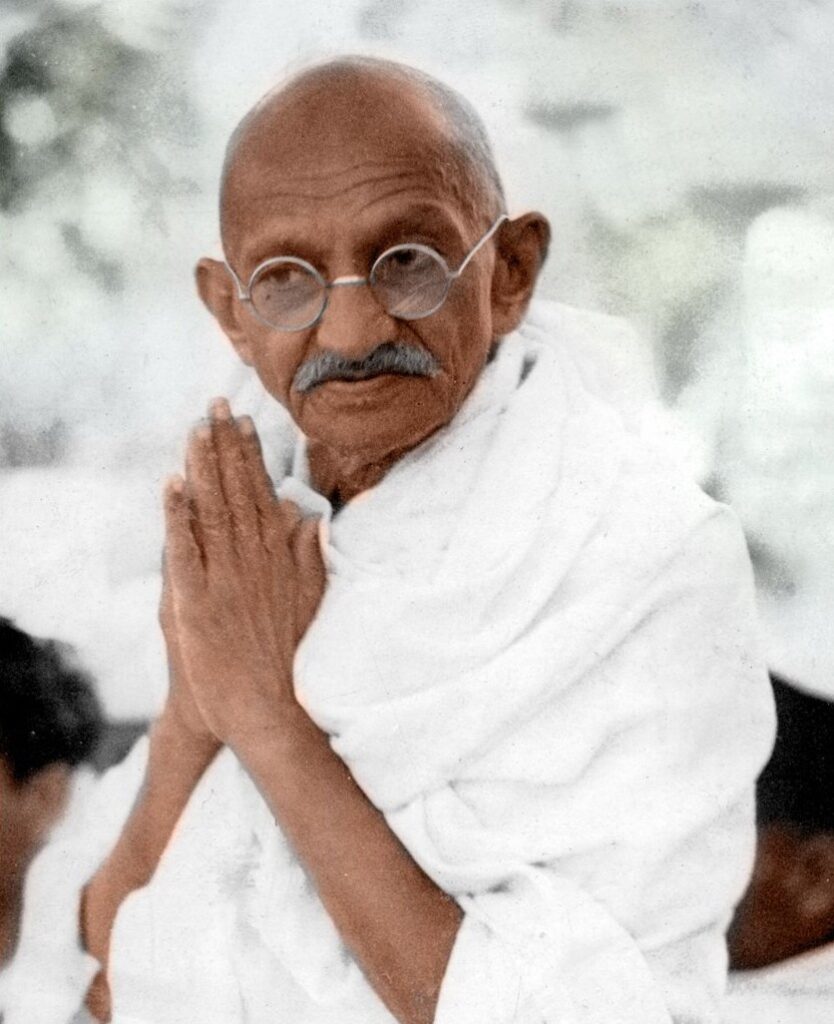
Should we simply rant and blame the perpetrators? Mahatma Gandhi pointed to this lack of self-respect and the tendency to surrender one’s dignity for survival as the reason people become easy to rule. When asked his opinion of Western civilization, he famously remarked that it “would be a good idea.” But where do we stand back home?
Unfortunately, many debates in India also fall into the trap of a single-story framework. Traditional and newly emerging nationalists argue that Indian history has long been presented through a single left-liberal intellectual lens and is therefore distorted or, at the very least, biased. That criticism may hold some truth, but an alternative narrative worthy of this great civilization has yet to emerge, apart from occasional fanatical assertions. The same applies to communal harmony. We tend to overlook our centuries-old traditions of coexistence despite a few historical aberrations. Instead, we continue to believe the single story that emerged in 1947, often forgetting that the original conflict was between Christianity and Islam. Will the liberal, pluralistic, and free-flowing Hindu ethos eventually transform into something else? That is the power of stories.
Extend this to our daily lives. Consider the way we often disrespect our own languages and the cultures that have evolved around them in favour of everything associated with “English” – and I do not mean the language alone. Yet the response to this cultural imbalance is often not a rediscovery of our own way of living but a reactionary, borrowed form of aggression. The resulting friction is damaging to the national psyche. We should not fall into the trap of enforcing yet another single story.
The need to re-examine our multitude of stories – our ways of existence and thought – should not be ignored, lest they disappear altogether. This must be done not with arrogance about our glorious past, but by recontextualising, reinterpreting, and repositioning it within the contemporary world. Only then can we restore our tolerance for diversity, where my story is as valid as another person’s. That, ultimately, will be our true redemption and freedom.
(Cover Image: AI Generated)
Chimamanda Ngozi AdichieCivilisationColonialismCultureDiversity of Perspectiveshuman mindIndiaNarrativeOpinionPoliticsPowerpsychologySingle StorySocial CommentarySociety