
By Prateek Chauhan
New Delhi: In one of the most significant anti-terror crackdowns in recent years, the Delhi Police Special Cell has dismantled an alleged Pakistan-backed terror-crime module operating in Delhi-NCR, arresting seven operatives accused of smuggling weapons and narcotics, recruiting local youth, and carrying out reconnaissance of potential targets under the direction of handlers based across the border.
The investigation has revealed what police describe as a dangerous nexus between organised crime, narcotics trafficking, and Pakistan-sponsored terrorism, allegedly orchestrated by Pakistan-based gangster-turned-terrorist Shahzad Bhatti and his close associate Ajmal Gujjar, with the backing of Pakistan’s Inter-Services Intelligence (ISI).
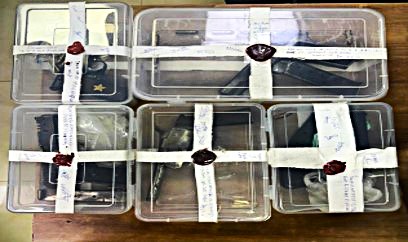
According to DCP (Special Cell) Narra Chaitanya, the operation led to the recovery of five sophisticated semi-automatic pistols, 41 live cartridges, seven mobile phones containing alleged chats and voice messages exchanged with Pakistan-based handlers, a Scorpio vehicle, and details of multiple bank accounts suspected to have been used to route proceeds from illegal arms and drug trafficking.
“The network was being remotely operated from Pakistan and was using criminal activities as a cover for terror operations. Vulnerable youth were being identified and recruited through social media platforms,” Chaitanya said.
The breakthrough came after intelligence inputs received in May indicated that Bhatti and Gujjar were planning to activate local operatives to execute attacks in Delhi-NCR. Acting swiftly, Special Cell teams apprehended Mohit alias Yogi near the Bhagirath Water Treatment Plant in Yamuna Vihar. Police recovered an illegal pistol, four live cartridges, and a mobile phone allegedly containing incriminating communications with foreign handlers.
His interrogation led investigators to six more suspects — Anas Tyagi, Deepak Agrola, Arif alias Pradhan, Karanveer Singh, Jatan, and Sabir. Police claim several of them were in direct contact with Pakistan-based handlers through encrypted communication platforms and had criminal histories involving murder, attempted murder, arms offences, and narcotics-related cases.
Investigators allege the syndicate smuggled consignments of weapons and heroin from Pakistan into Punjab using drone drops before distributing them across Delhi and adjoining regions. To avoid detection, the network allegedly relied on dead-drop delivery systems, anonymous social media accounts, disposable mobile numbers, hawala channels, and digital payment routes designed to conceal financial trails.
The probe has also uncovered evidence suggesting that members of the module were tasked with conducting surveillance of public places, sensitive installations, and selected individuals in Delhi, Haryana, and western Uttar Pradesh. Photographs, videos, and location details were allegedly transmitted to handlers in Pakistan for operational planning.
Senior police officials said the objective of the network went far beyond criminal profit. “The intention was to create fear, disturb communal harmony, and lay the groundwork for future terror strikes,” an officer involved in the investigation said, adding that the arrests may have prevented multiple planned incidents.
The investigation has further exposed deep links between organised crime and the terror module. According to the DCP, some of the accused initially came into contact with Ajmal Gujjar through social media while attempting to procure sophisticated firearms. Their association allegedly evolved into arms trafficking, narcotics smuggling, and assignments linked to terror activities.
A key lead emerged from the role of gangster Deepak Agrola, who was lodged in Mandoli Jail. Despite being incarcerated, police allege he remained actively connected to the network and facilitated the procurement of illegal weapons through associates operating outside the prison.
Authorities are now pursuing absconding suspects, tracing financial conduits, and investigating the wider cross-border conspiracy. Officials are also examining links between the arrested operatives and foreign-based handlers believed to be directing activities from outside India.
With the arrests and seizures, Delhi Police claims to have dismantled a critical node in a larger Pakistan-backed terror ecosystem that allegedly exploited organised crime, social media recruitment, and narcotics trafficking to further anti-India operations from across the border.
attackCriminalDelhi Crime BranchDelhi PoliceDelhi-NCRIndiaInter-Services IntelligenceISIPakistanSpecial Cell Delhi PoliceTerrorismTerrorist